
Science
Science is fundamental to achieving our motto, “Students of today, citizens of tomorrow,” by nurturing critical thinkers who can understand and shape the modern world. The curriculum, driven by inquiry, actively embeds our core values.
Scientific investigation requires calculated risk-taking, which rapidly builds confidence in hypothesis formation and experimental design. The process of testing, re-testing, and analysing complex data demands immense determination, teaching students to persevere through failed experiments and use mistakes as steps toward discovery.
Science fosters respect for evidence, logical reasoning, and the intellectual contributions of scientists globally. Collaborative practical work encourages kindness and teamwork, ensuring a safe and supportive lab environment where all ideas and contributions are valued.
Science directly instils responsibility by exploring ethical issues (e.g., genetic engineering, climate change) and safety protocols. Students learn to handle powerful knowledge with care, understand their impact on the planet, and critically evaluate information, preparing them to be scientifically literate, ethical, and responsible citizens of tomorrow.


At Ralph Sadleir we believe learning Science is important because:
Curiosity and Inquiry: Students aged 9 – 13 are still naturally curious about the world around them. Teaching science encourages them to ask questions, make observations, and explore the natural phenomena, fostering a sense of inquiry and discovery.
Critical Thinking Skills: Learning science promotes critical thinking skills such as observation, analysis, inference, and evaluation of evidence. Students learn to think logically and systematically, which are essential skills for problem-solving in all areas of life.
Understanding of the Natural World: Science provides a framework for understanding the natural world, including concepts related to biology, chemistry and physics. Through hands-on experiments and investigations, students learn about the properties of matter, energy, forces, living organisms, ecosystems, and Earth processes.
Application of Knowledge: Science education emphasizes the application of knowledge to real-world situations. Students learn to apply scientific principles to solve practical problems, make informed decisions, and address global challenges such as climate change, pollution, and sustainability.
Preparation for Future Careers: Science knowledge is essential for success in many future careers, including those in STEM (Science, Technology, Engineering, and Mathematics) fields. By engaging with science at a young age, students develop foundational knowledge and skills that can prepare them for future educational and career opportunities.
Promotion of Innovation and Creativity: Science education fosters creativity and innovation by encouraging students to think outside the box, experiment with new ideas, and explore unconventional solutions to problems. It nurtures a culture of curiosity and exploration that is essential for scientific advancement and technological innovation.
Empowerment and Engagement: Learning science empowers students to become informed and engaged citizens who can critically evaluate scientific information. It cultivates a sense of responsibility towards the natural world and the broader community.
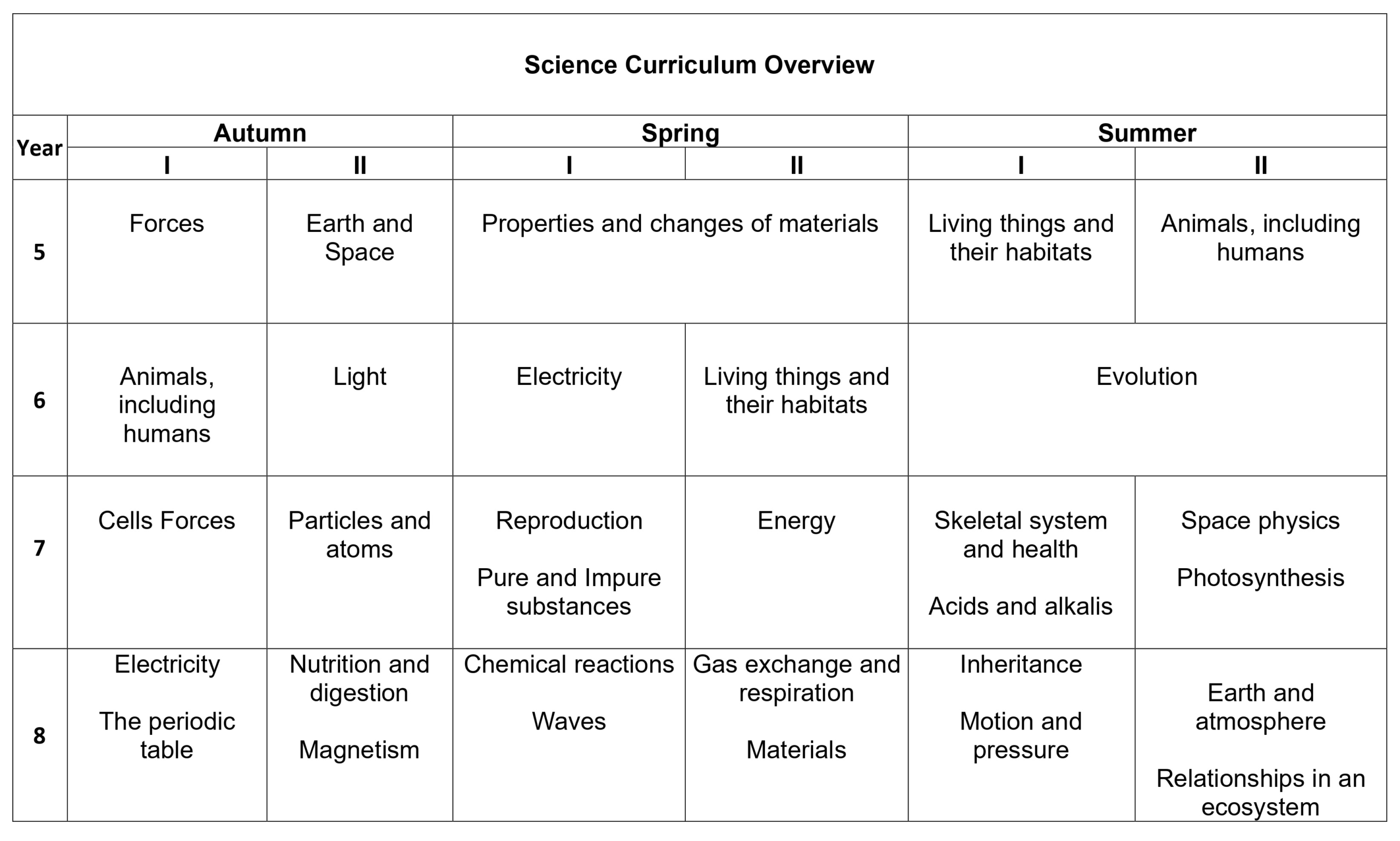
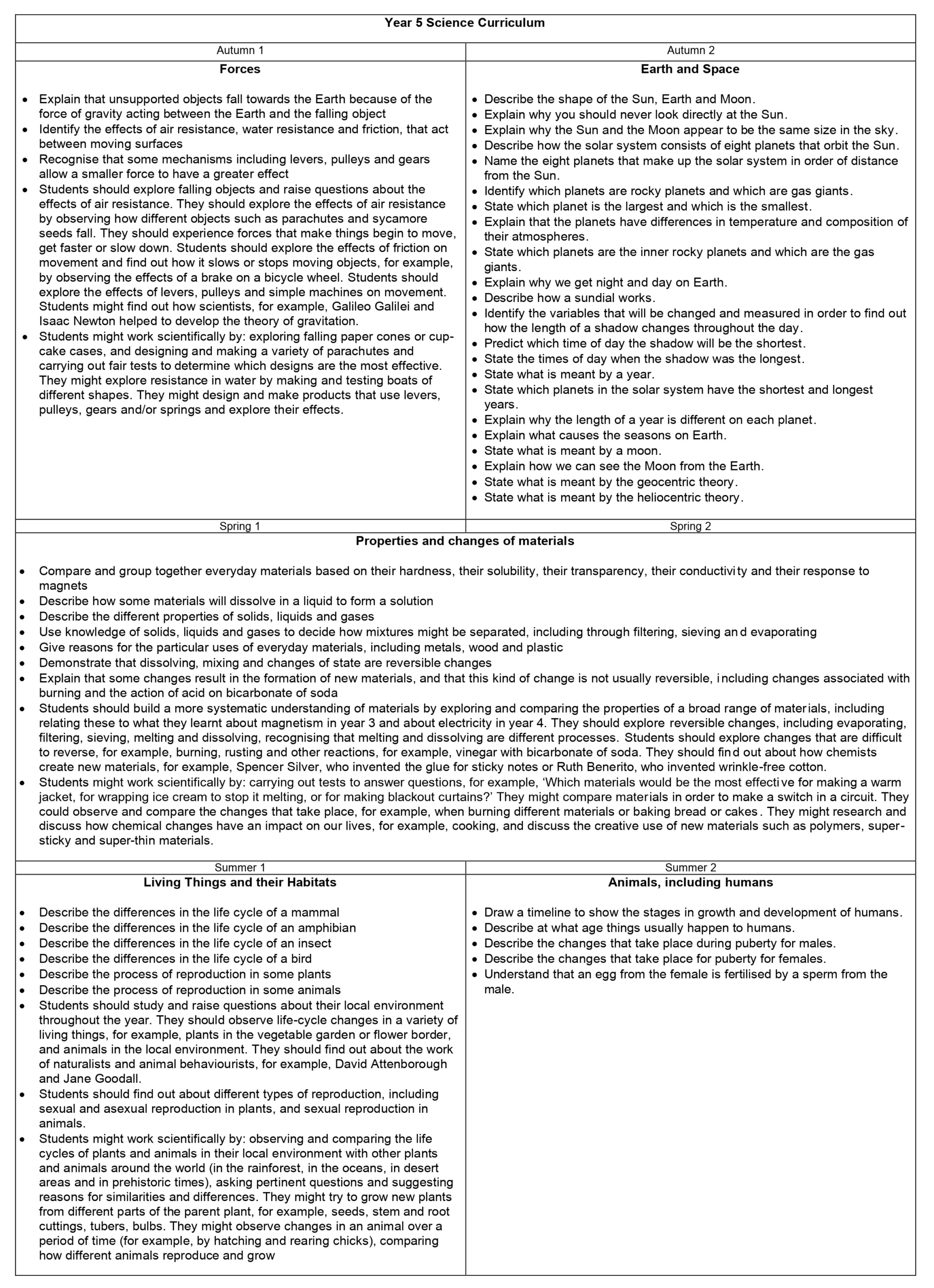
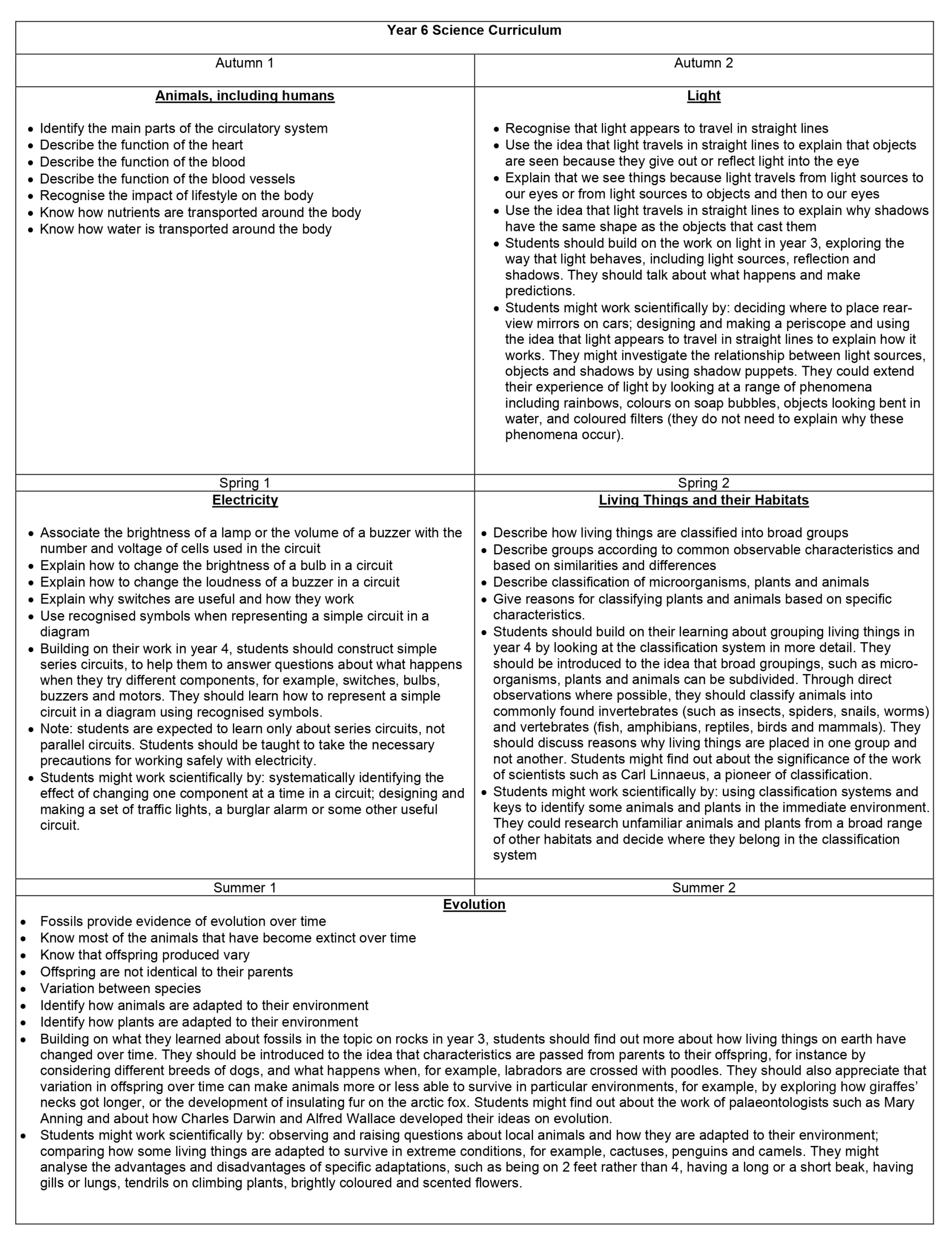
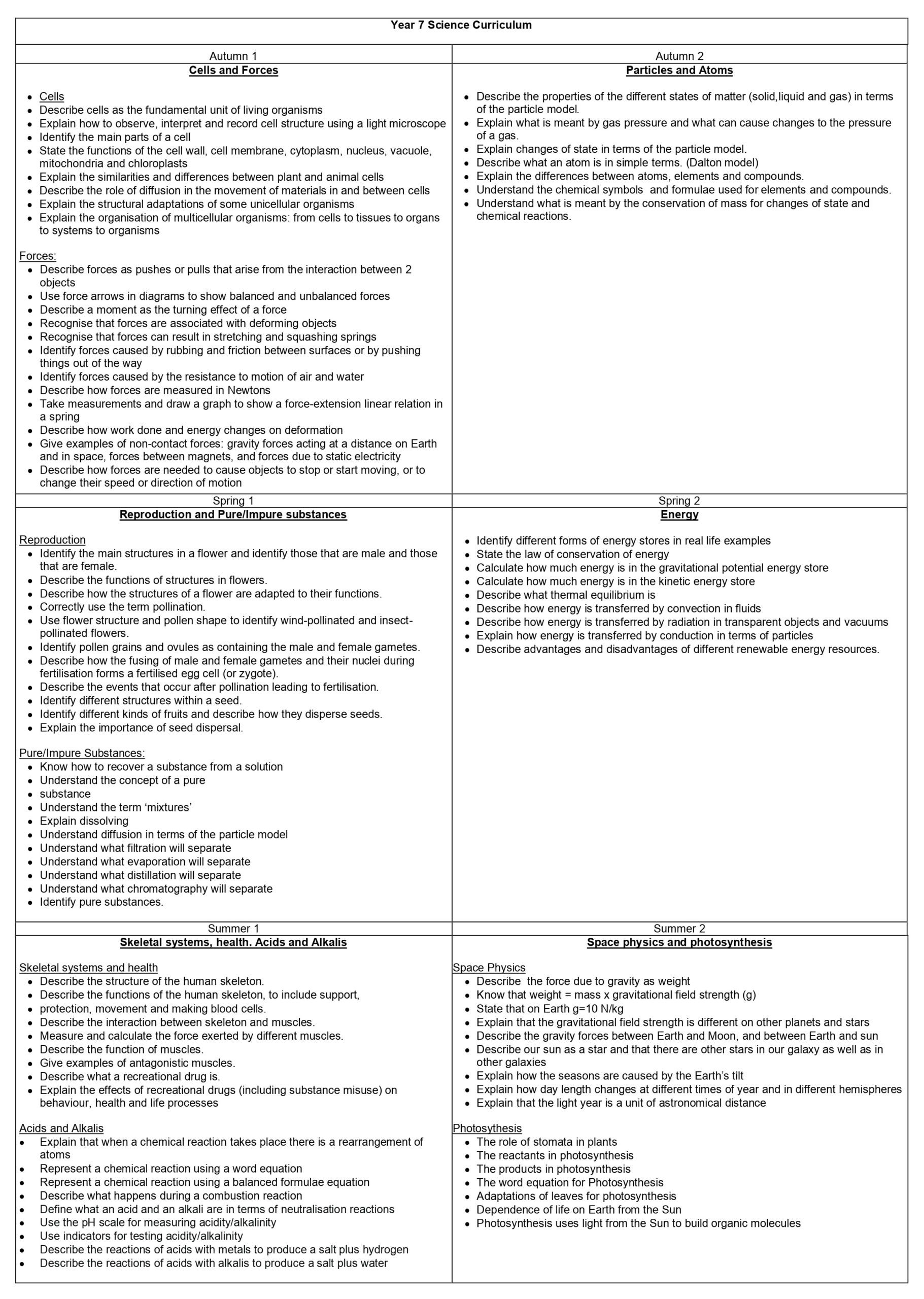
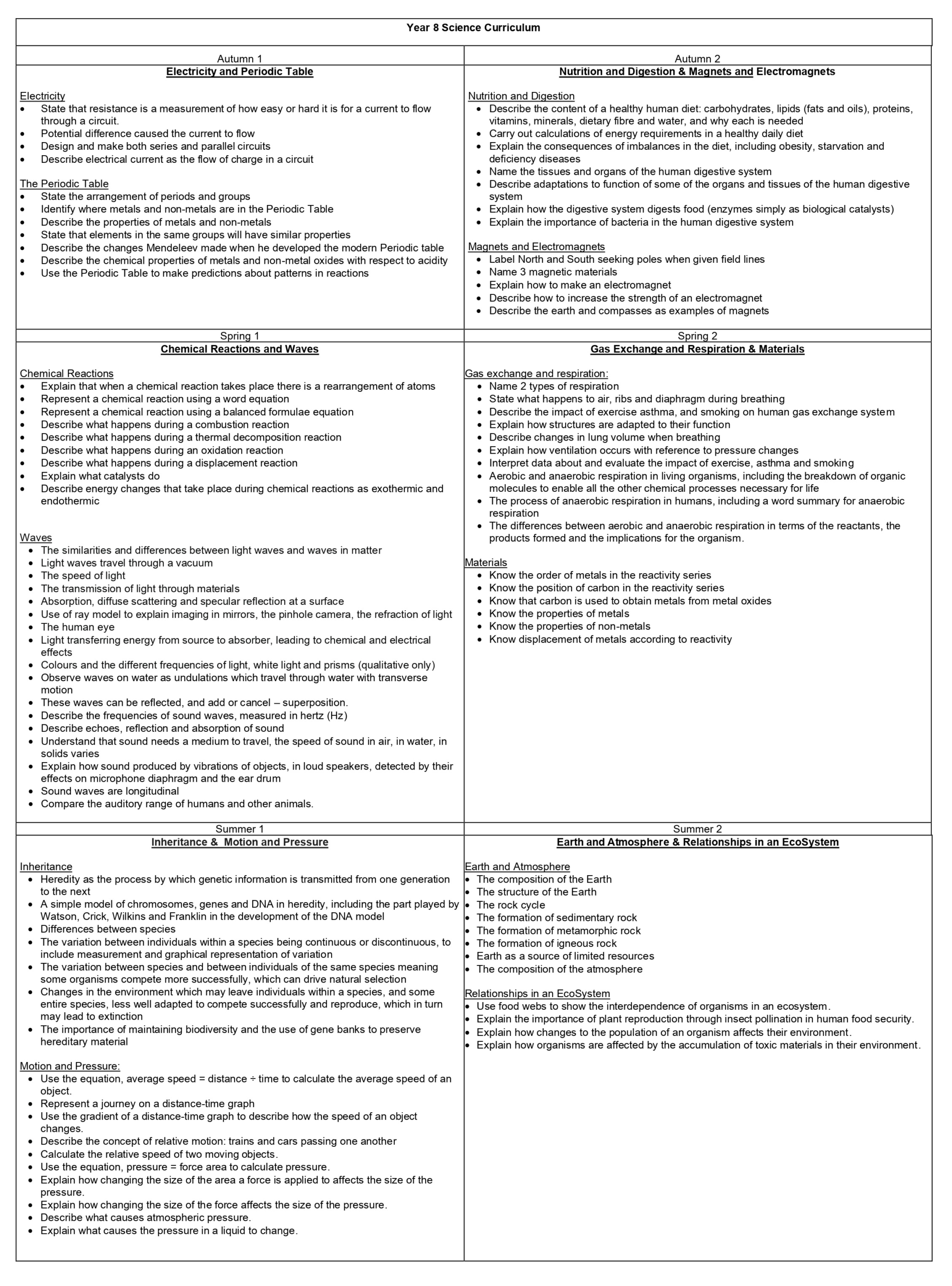
Click the tables for a full view.